Ancestral Linkage Groups
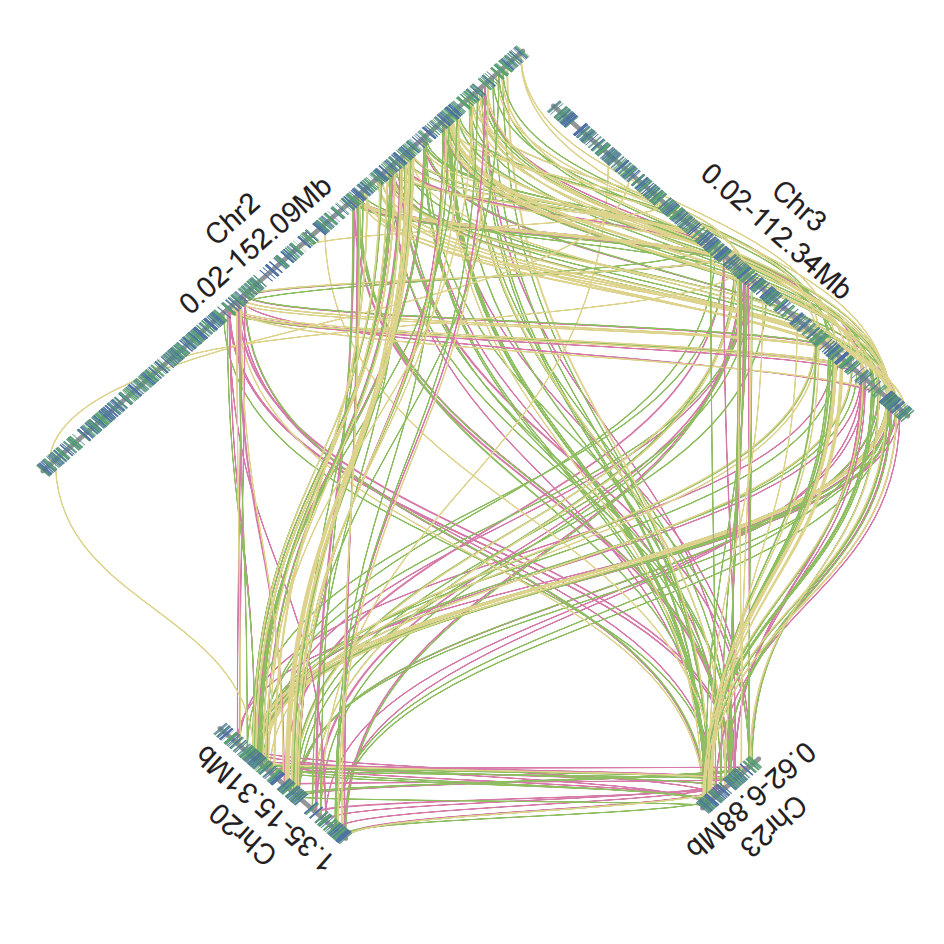
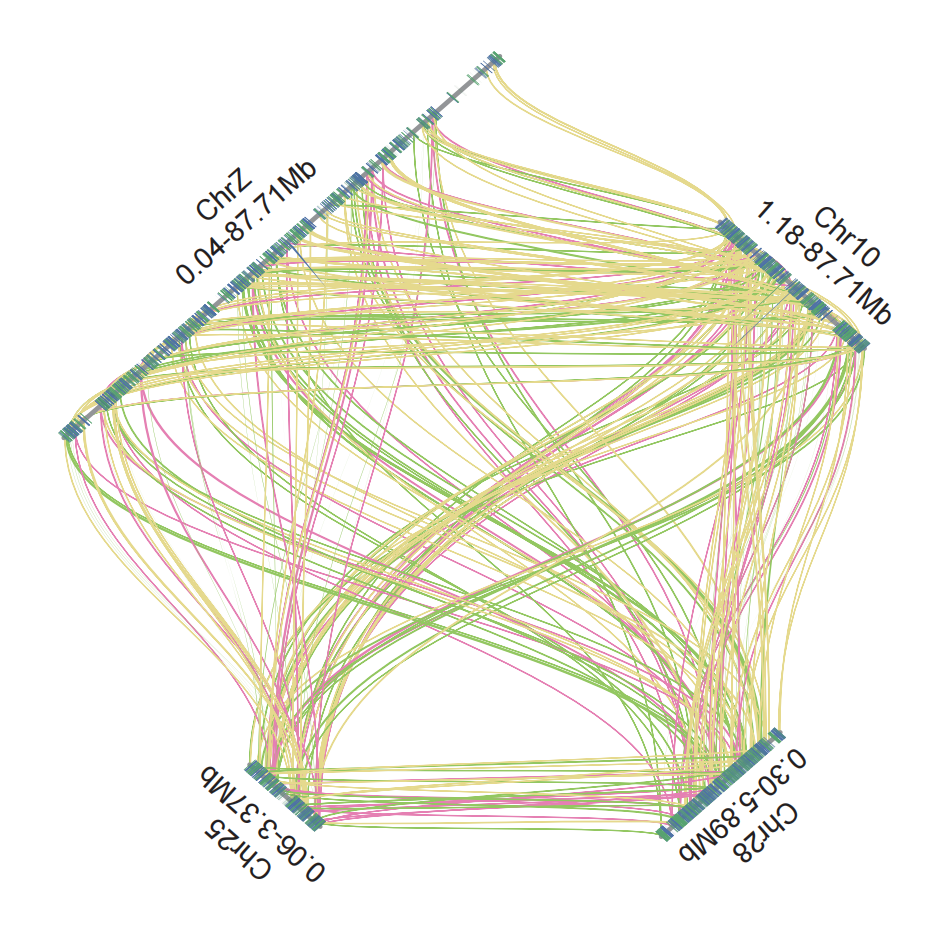
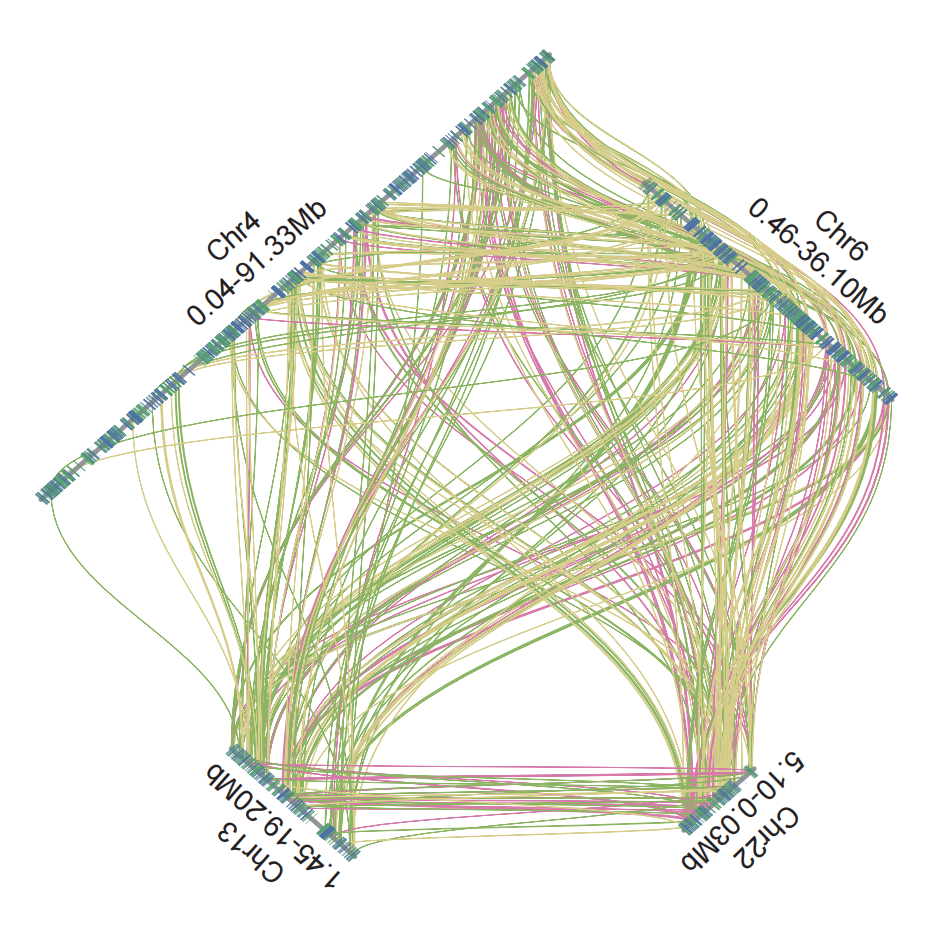
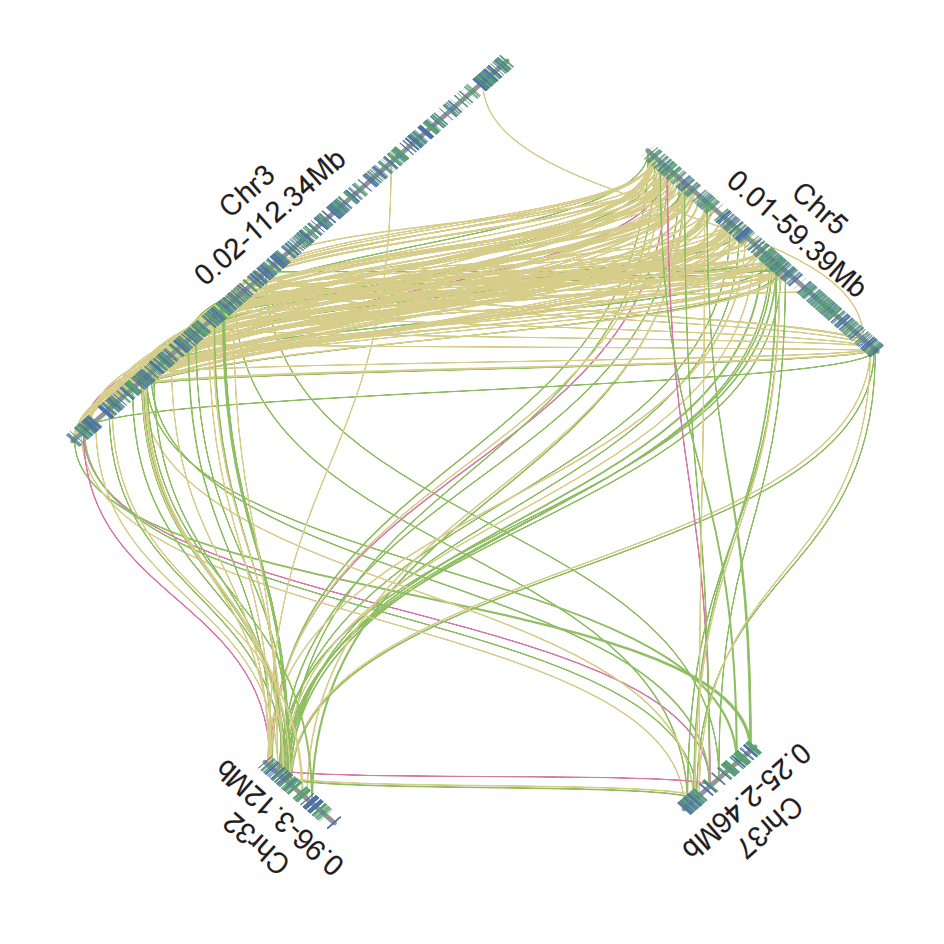
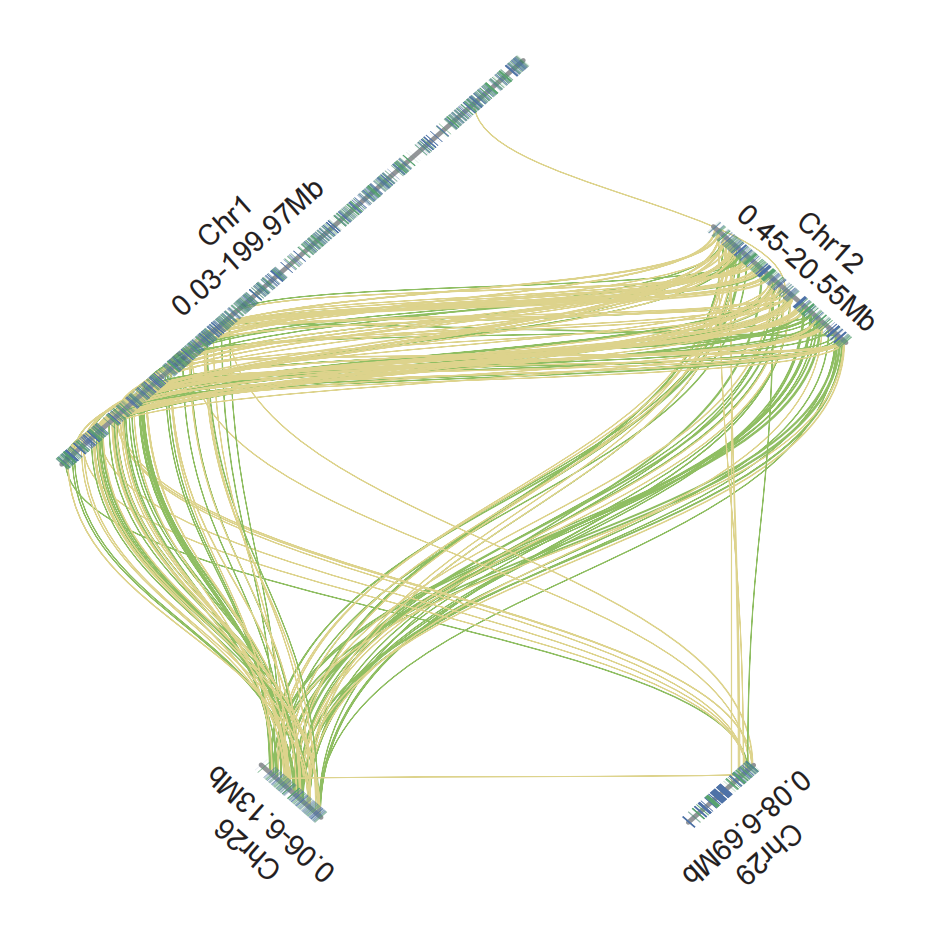
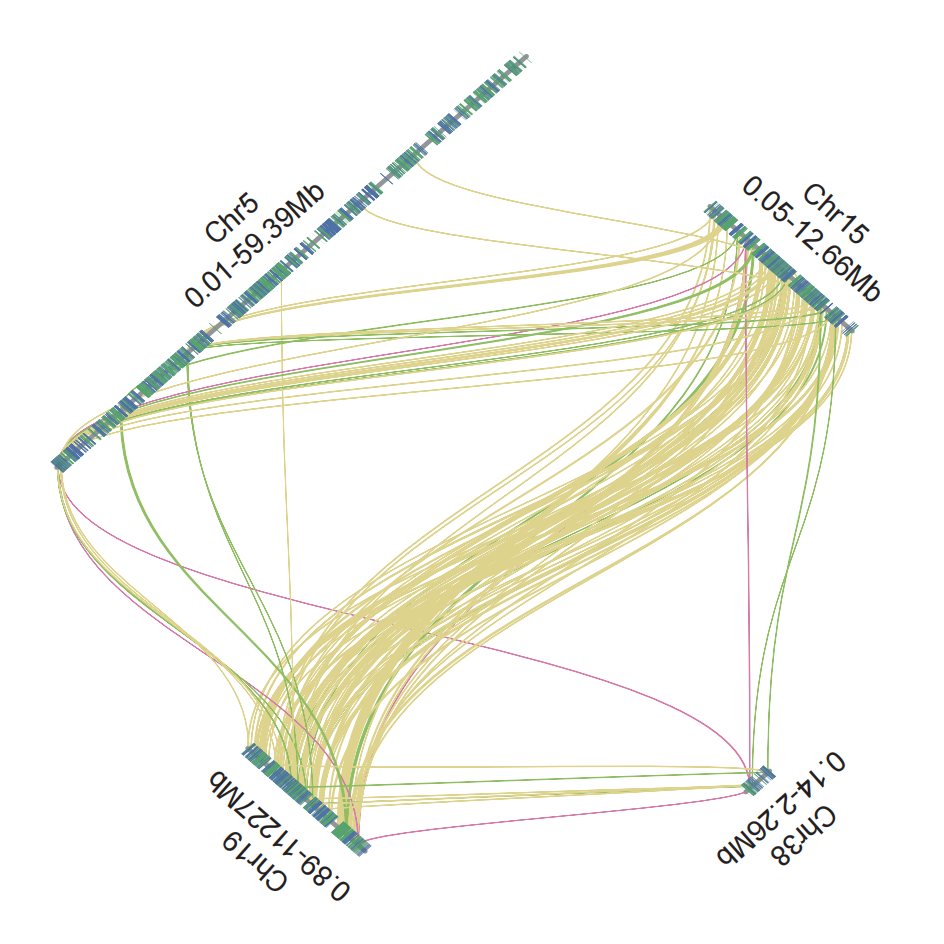
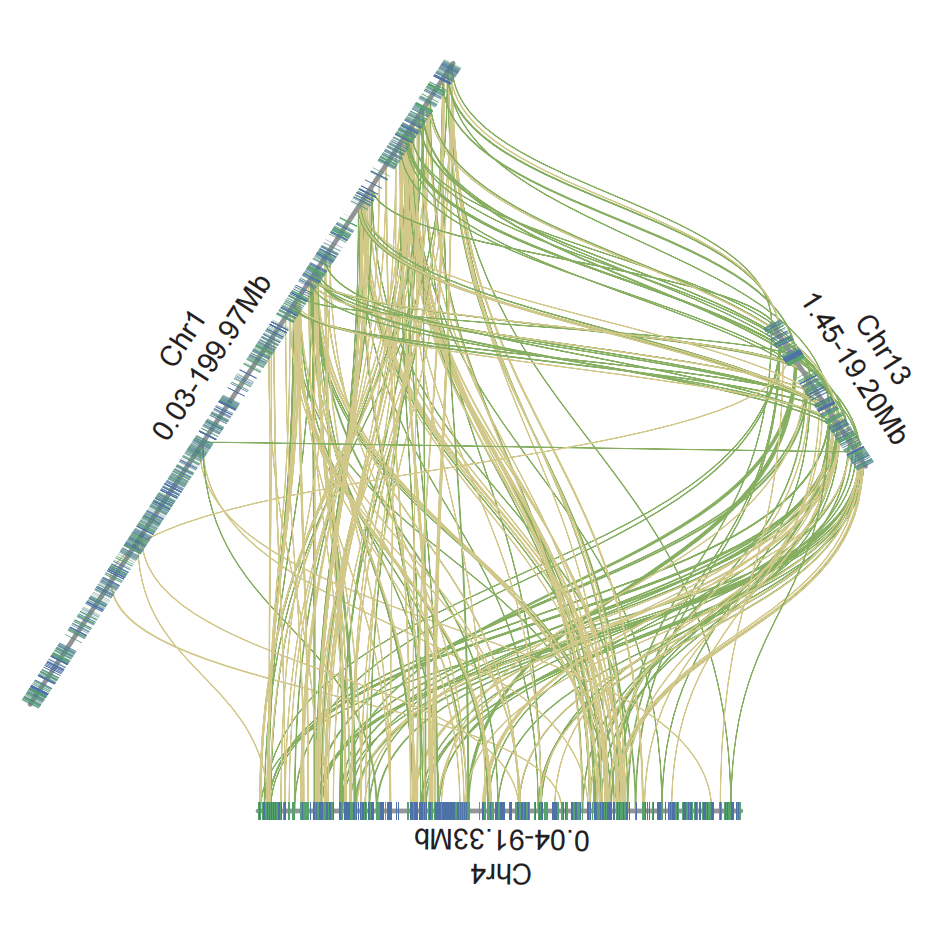
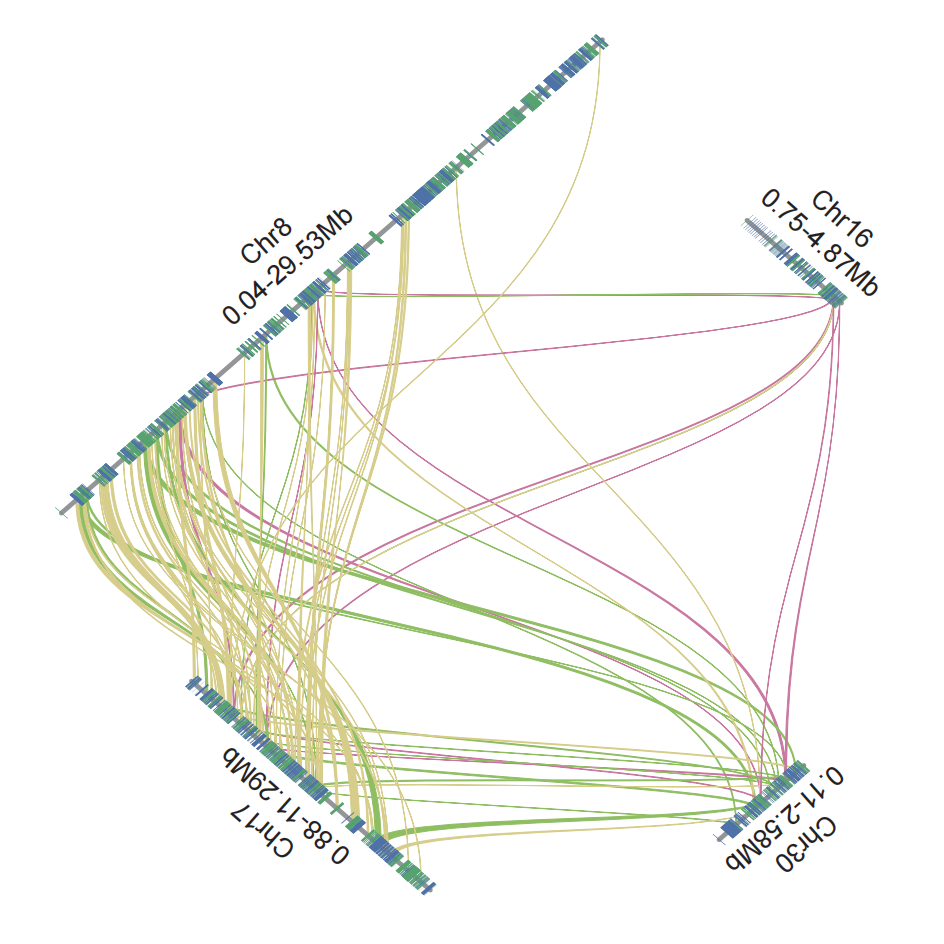
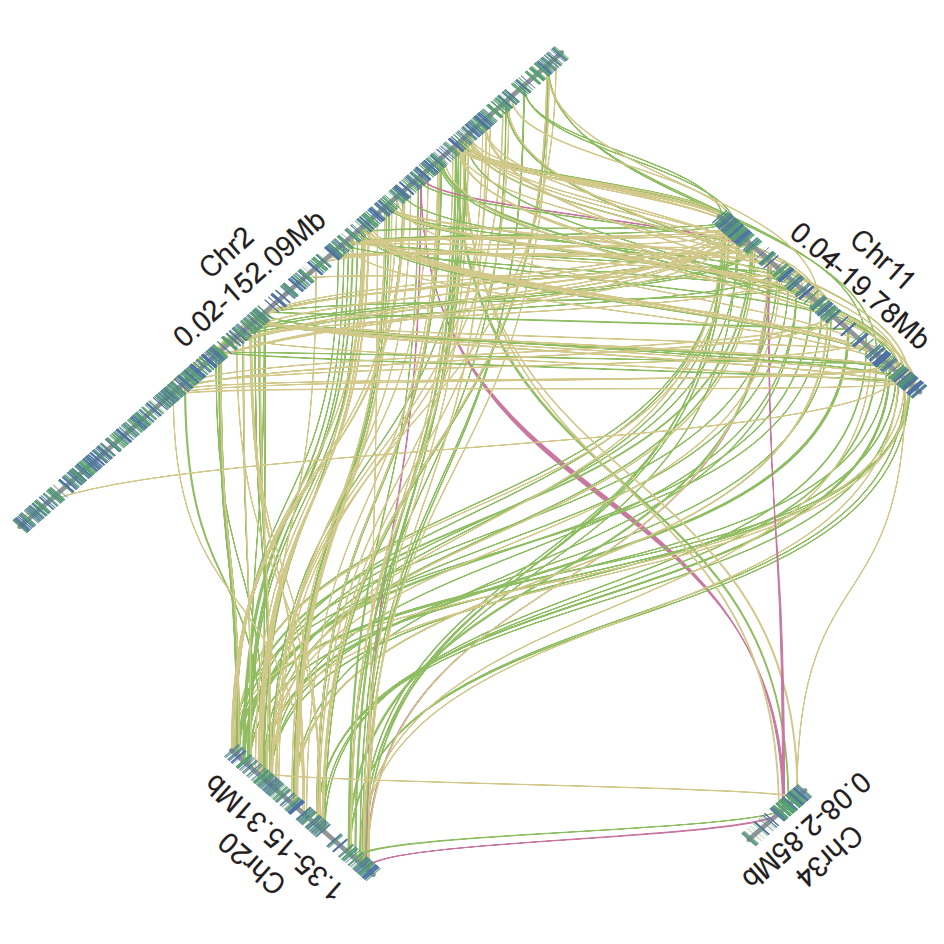
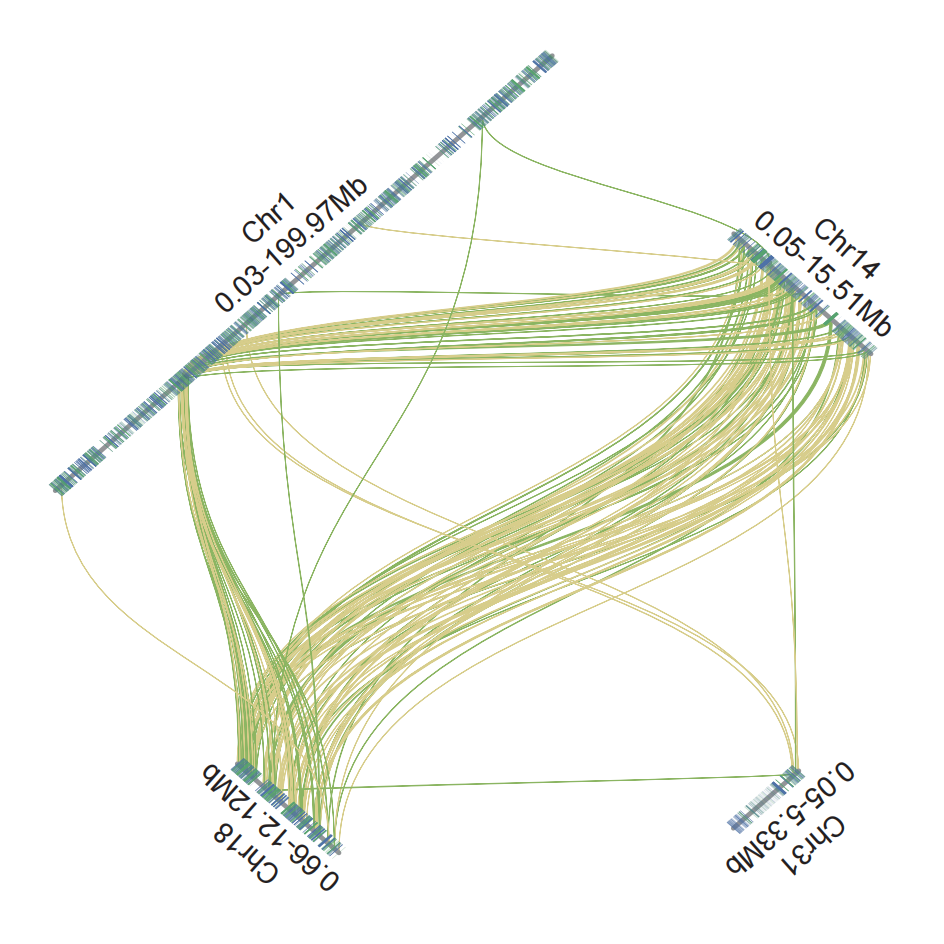
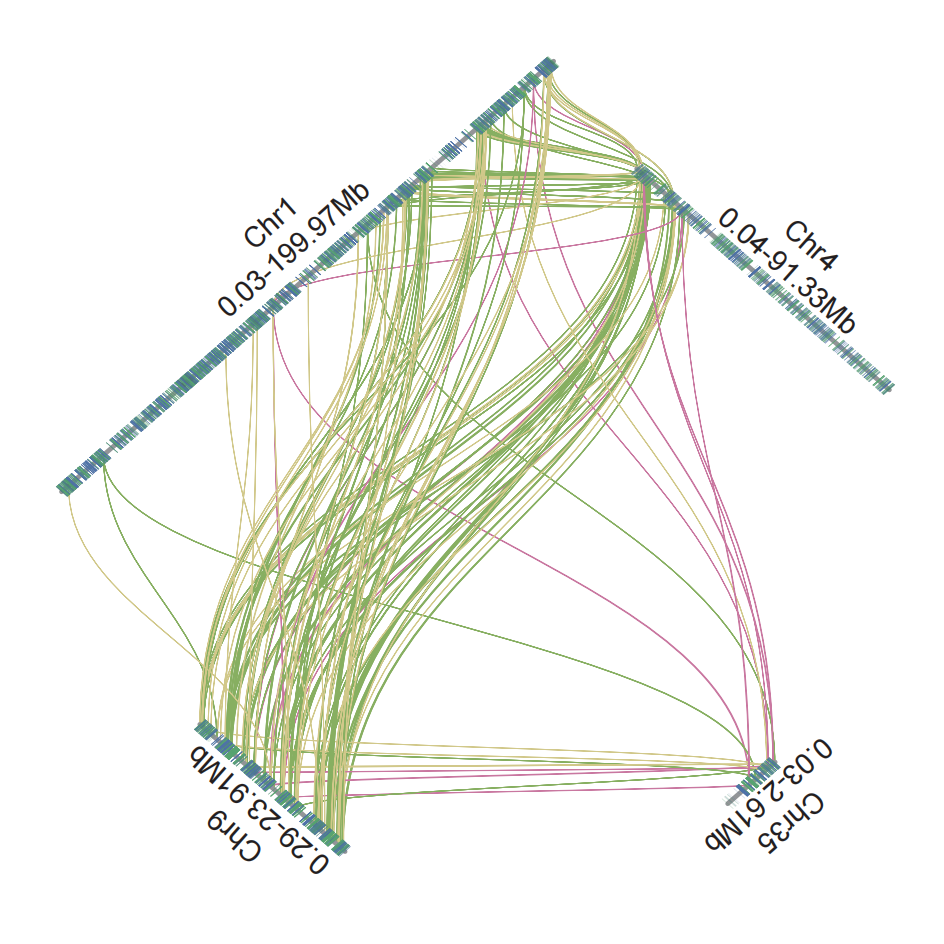
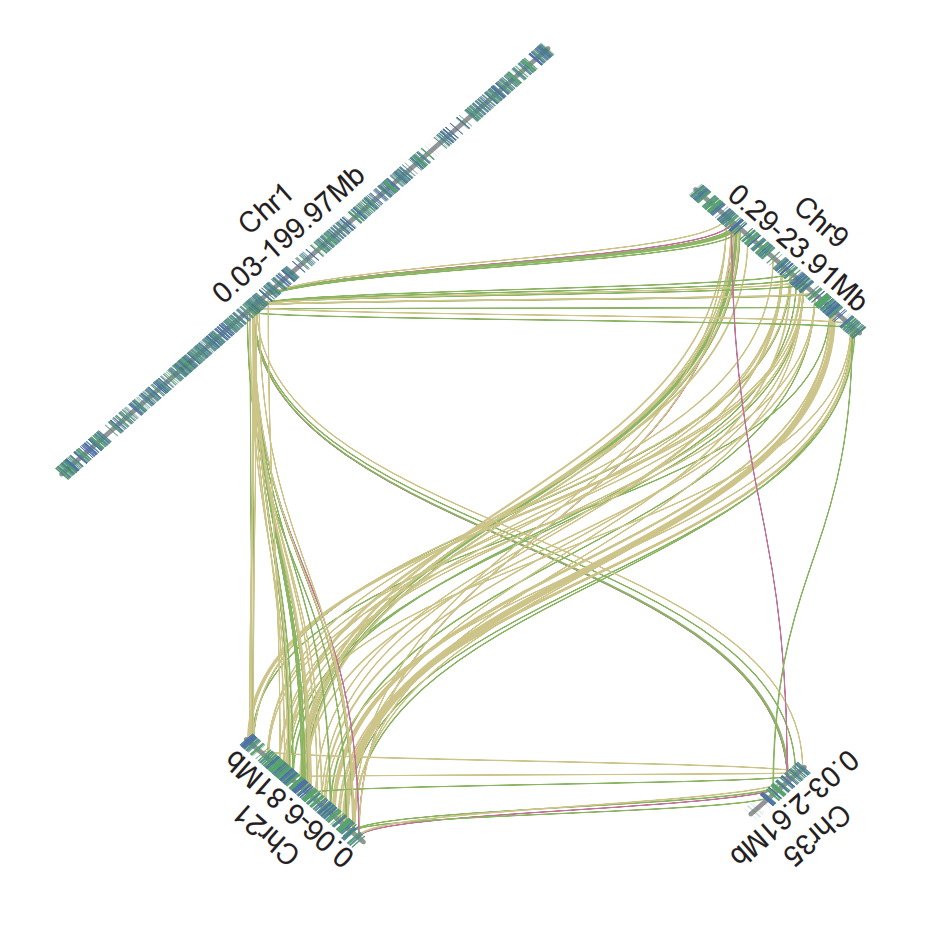
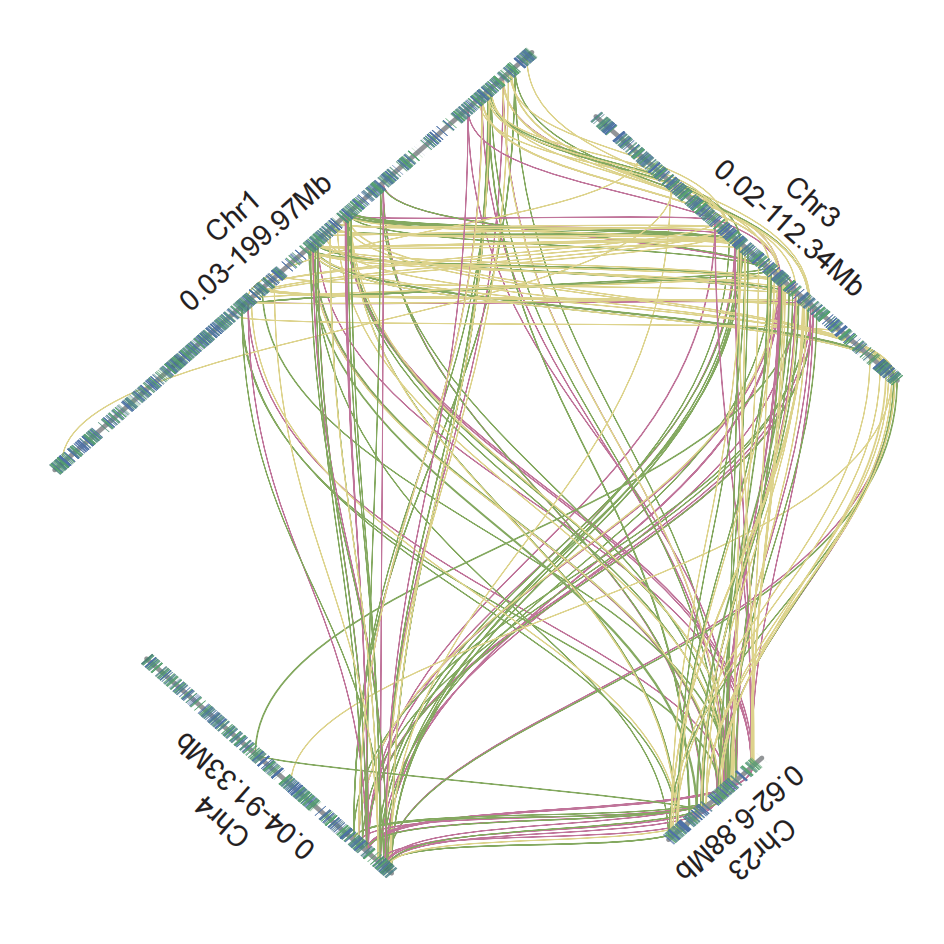
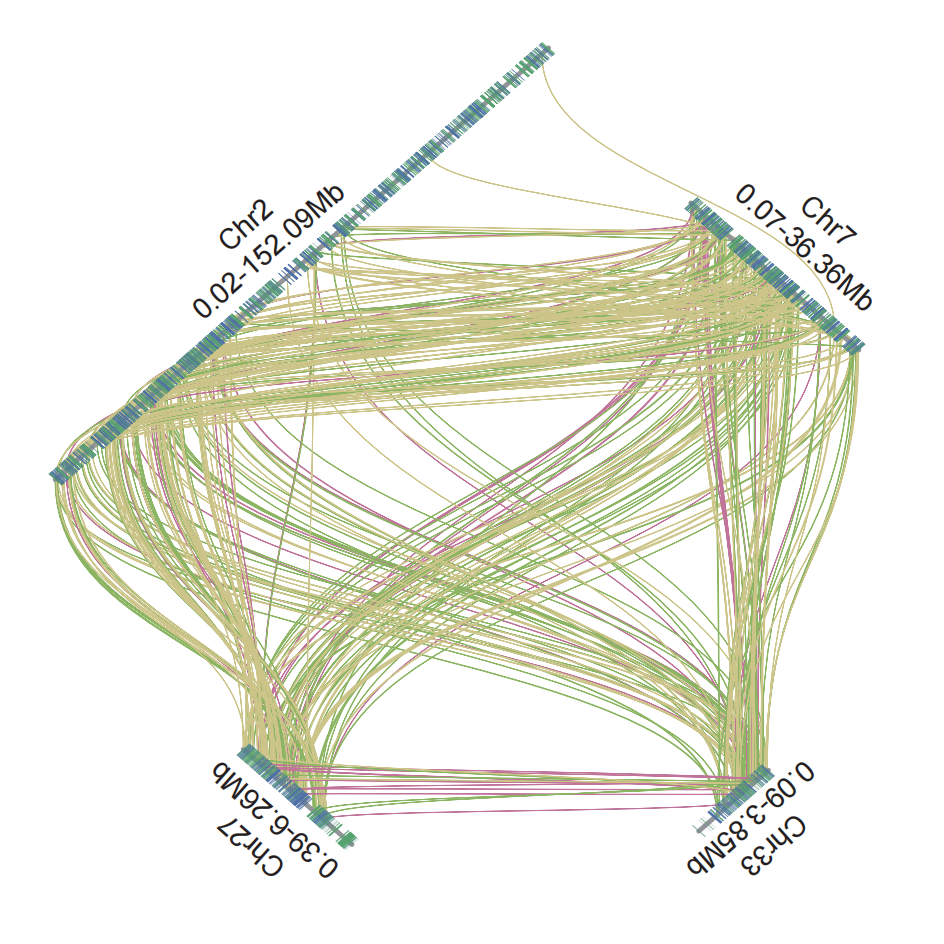
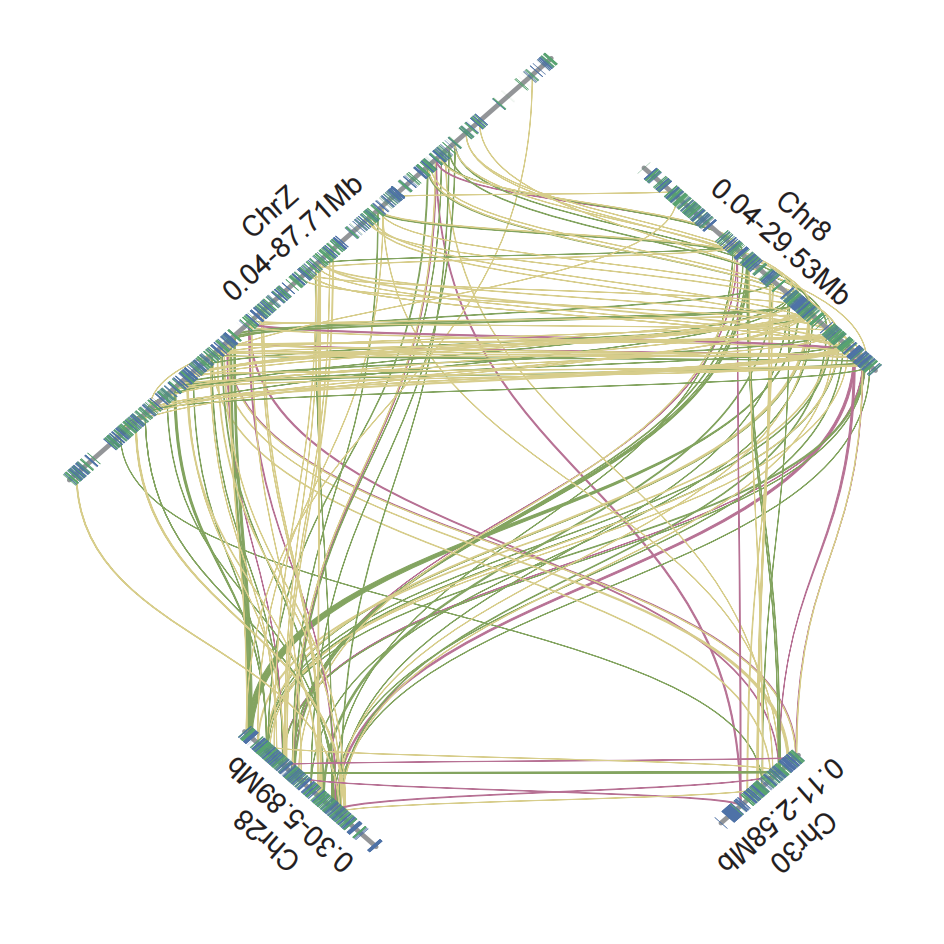
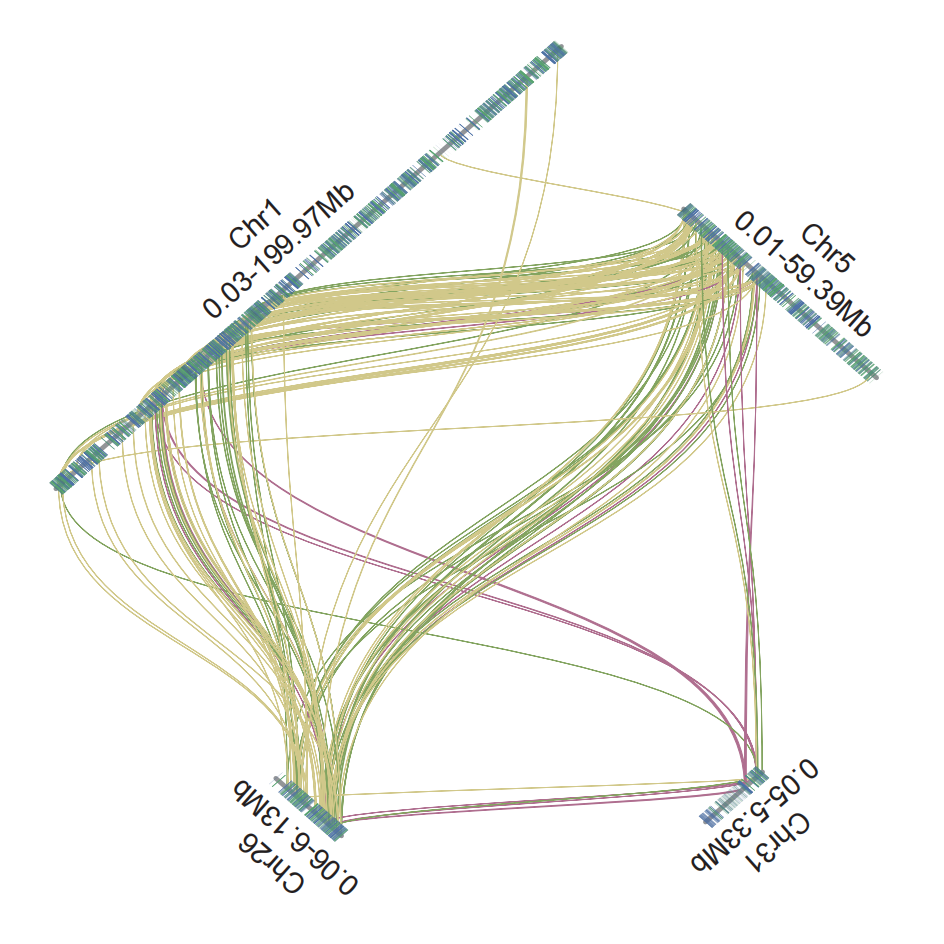
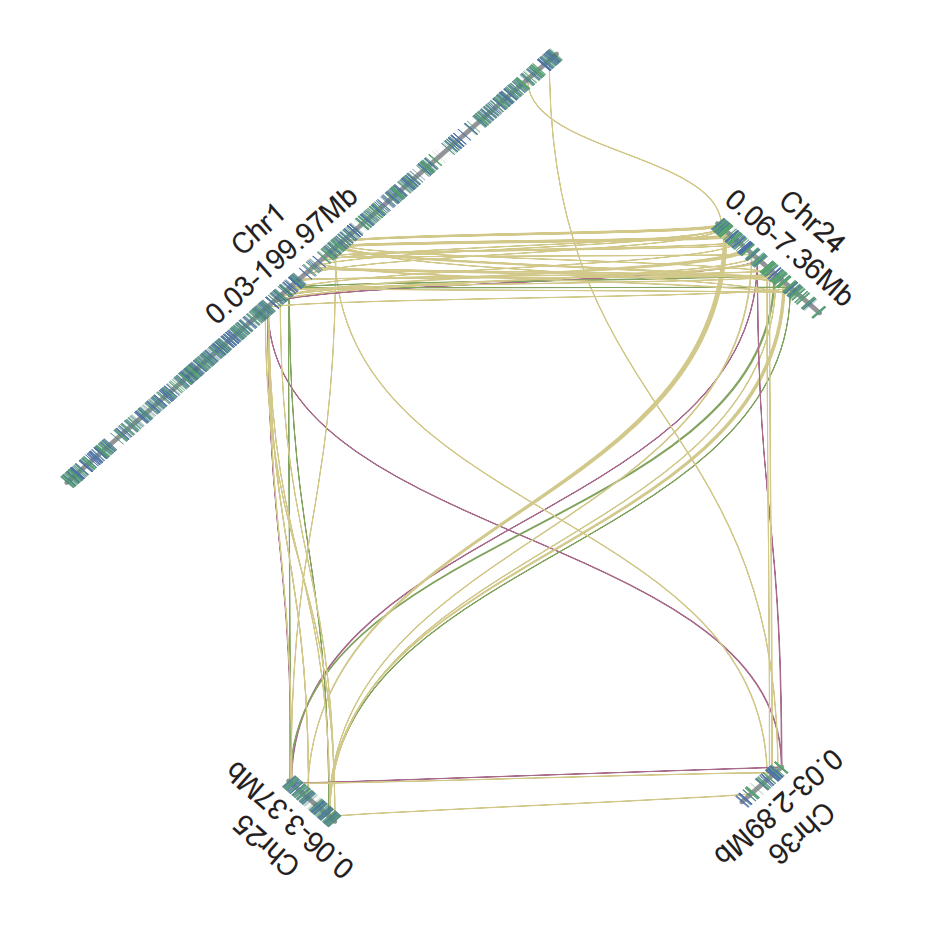
The numbers below the figure represent the ancestral linkage groups, each ancestral linkage groups to a different amphioxus chromosome. According to research, most amphioxus chromosomes are homologous to four different chicken chromosomes (see table for details). Based on this relationship, we further divided the identified ohnolog groups into 17 categories. The pink lines show the collinear relationship of ohnolog genes on four homologous chromosomes in chicken, the green lines show the collinear relationship of ohnolog genes on three homologous chromosomes in chicken, and the yellow lines show the collinear relationship of ohnolog genes on two homologous chromosomes in chicken.
- Huang Z, Xu Z, Bai H, et al. Evolutionary analysis of a complete chicken genome. Proc Natl Acad Sci USA. Full text
- Singh PP, Arora J & Isambert H. (2015) Identification of ohnolog genes originating from whole genome duplication in early vertebrates, based on synteny comparison across multiple genomes. PLOS Computational Biology. 11(7):e1004394. Full text
- Singh PP, Affeldt S, Cascone I, Selimoglu R, Camonis J & Isambert H. (2012) On the expansion of "dangerous" gene repertoires by whole-genome duplications in early vertebrates. Cell Reports. 2(5):1387-98. Full text
- Singh PP, Affeldt S, Malaguti G & Isambert H. (2014) Human Dominant Disease Genes are Enriched in Paralogs Originating from Whole Genome Duplication. PLOS Computational Biology. 10(7):e1003754. Full text
- Ohno S, Wolf U, Atkin N B. Evolution from fish to mammals by gene duplication. Hereditas. 1968, 59(1): 169-187.
References